
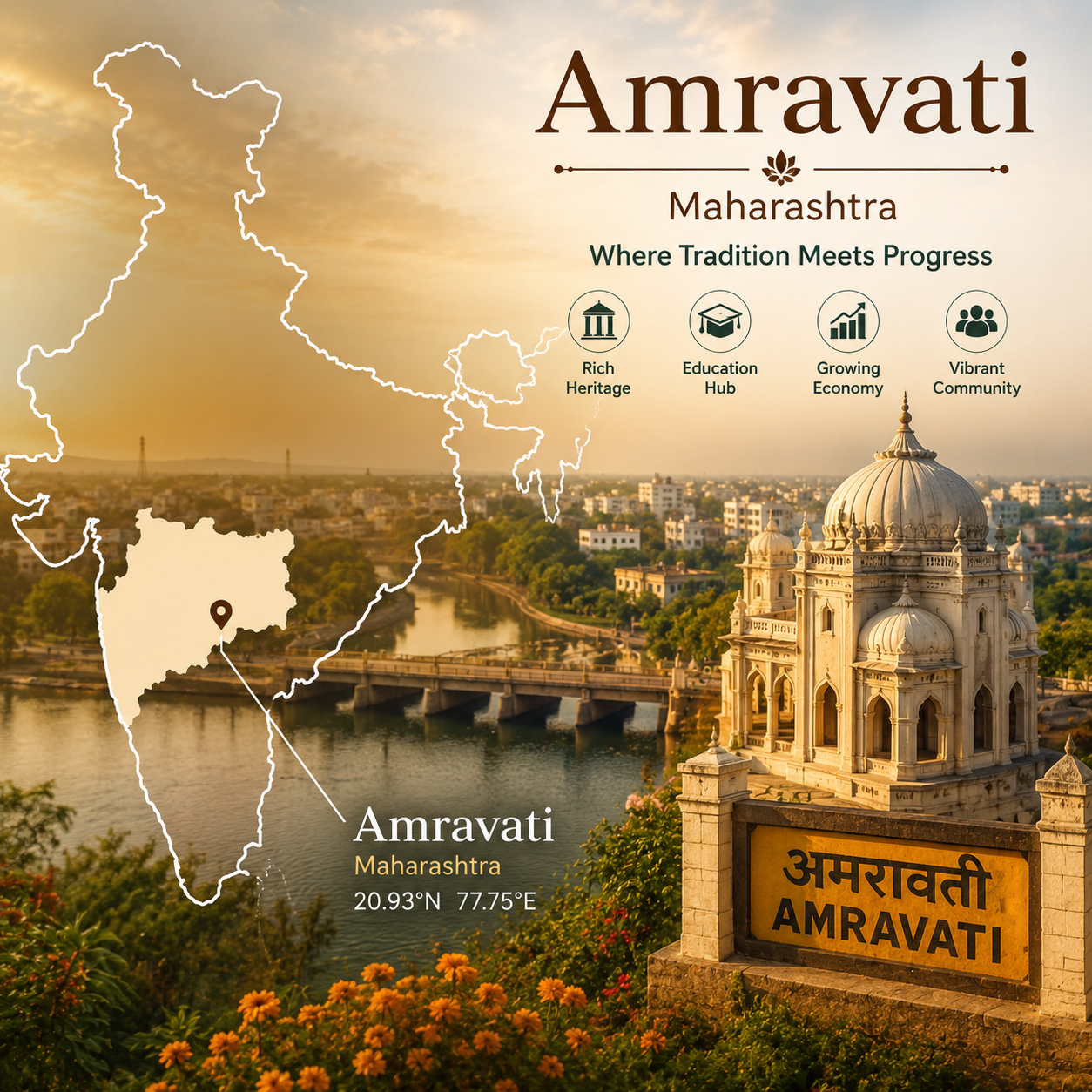
Welcome to Amravati, a city of cultural heritage, educational excellence, and growing development in the heart of Maharashtra.Known for its historical significance, vibrant traditions, and peaceful lifestyle, Amravati beautifully blends heritage, community, and modern progress.
History of Amaravati
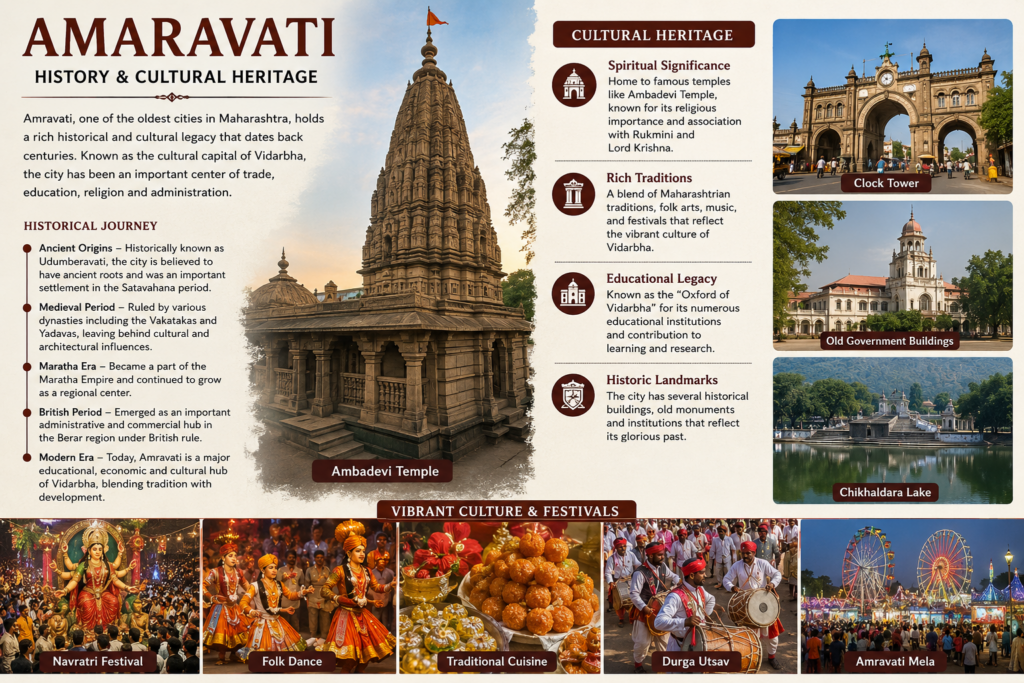
Amaravati is one of the important historical and cultural cities in the Indian state of Maharashtra. The city has a rich heritage connected with ancient traditions, regional rulers, and modern development.
Historical Background
Amaravati has been known for its cultural importance and agricultural growth for many centuries. The region was influenced by several dynasties and rulers who contributed to its traditions, architecture, and social development. Over time, Amaravati grew as an important center for trade, education, and administration in Maharashtra.The city is known for its vibrant festivals, temples, and traditional Maharashtrian culture. Amaravati reflects a blend of heritage and modern lifestyle, making it a significant destination in the Vidarbha region.
Geography & Location of Amaravati
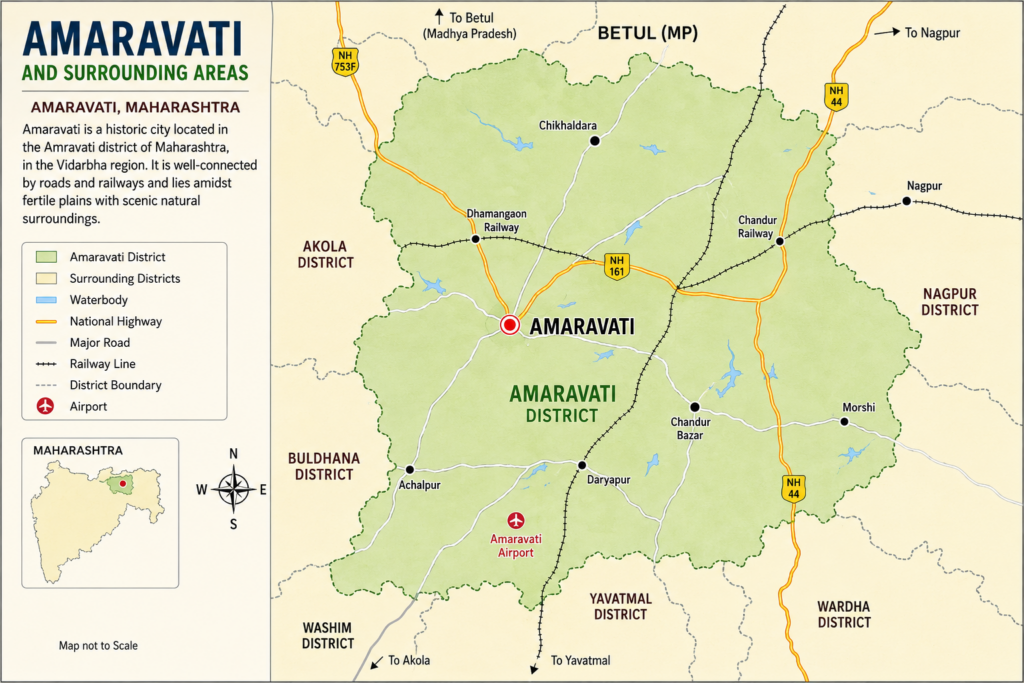
Amravati is a historic and rapidly developing city located in the Vidarbha region of Maharashtra. Positioned in the north-eastern part of the state, the city is known for its cultural heritage, educational institutions, and growing urbaninfrastructure.Amravati is surrounded by fertile plains and scenic natural landscapes, with the Satpura mountain ranges located nearby, adding to the region’s geographical beauty. The city enjoys excellent connectivity through major highways and railway networks, linking it with important cities like Nagpur, Akola, and Pune.The region experiences a blend of urban growth and natural surroundings, with nearby lakes, agricultural fields, and wildlife attractions contributing to its charm. Its strategic location within Maharashtra makes Amravati an important center for education, commerce, tourism, and regional development in the Vidarbha belt.
History & Cultural Heritage
Amravati is one of the historically and culturally important cities in the Vidarbha region of Maharashtra, known for its ancient heritage, spiritual significance, and educational prominence. The city traces its roots back to ancient times and has evolved through various dynasties, including the Satavahanas, Rashtrakutas, and later the Marathas, each contributing to its cultural and architectural legacy.Historically known as “Udumberavati,” Amravati developed as a significant trade and cultural center due to its strategic location in central India. During the British era, the city emerged as an important administrative and commercial hub in the Berar region, helping shape its modern urban identity.Amravati is also renowned for its rich spiritual heritage, with famous temples such as the Ambadevi Temple attracting devotees and visitors from across the country. According to local belief, the temple is closely associated with the historical legends of Rukmini and Lord Krishna, adding to the city’s cultural importance.
Weather In Maheshtala




Frequently Asked Questions.
Amravati is located in the Vidarbha region of Maharashtra, in central India.
Amravati is famous for its historical heritage, educational institutions, temples like Ambadevi Temple, and nearby hill station destinations such as Chikhaldara.
The best time to visit Amravati is from November to February when the weather is cool and pleasant.
Amravati is well-connected by road and railway networks. Nearby airports and highways connect the city with major cities like Nagpur and Pune.
Popular attractions include:
- Ambadevi Temple
- Chikhaldara
- Melghat Tiger Reserve
- Historic temples, lakes, and cultural landmarks
Amravati experiences a tropical climate with hot summers, moderate monsoons, and mild winters.
Yes, Amravati is known as an educational hub in the Vidarbha region, with several reputed colleges and universities.
Marathi is the primary language spoken in Amravati, along with Hindi and English.